Italian Intermediate: From Words to Sentences through Everyday Life - A2-B1

Course Overview
This course is designed for students who have already completed at least one year of Italian study.
It develops your ability to speak about personal experiences, moving from simple past narration to more complex storytelling. The focus is on building fluency through structured speaking practice and narrative development, helping you express yourself more naturally and confidently in conversation.
Materials
The course book and all required learning materials will be provided by the teacher.
Course Breakdown
This outline provides an overview of what may be covered during the course; however, changes may occur based on various factors and the needs of the class.
This course is structured around the four key language-learning skills: listening, speaking, reading and writing, with a fifth focus on Italian culture and cultural awareness.
Students will develop their ability to communicate in Italian through conversations and activities based on past experiences, memories, family, travel, everyday life and future plans. The course encourages students to speak more confidently, develop their storytelling skills and use a wider range of language structures in meaningful, real-life contexts.
Term Dates
Term 1 runs from Monday 2 February to Monday 23 March
Term 2 runs from Monday 20 April to Monday 29 June
Term 3 runs from Monday 20 July to Monday 21 September
Term 4 runs from Monday 12 October to Monday 14 December
Course outcomes
By the end of the course, students will be able to:
• Talk about past experiences, memories, life events and personal achievements.
• Describe people, places and situations in greater detail.
• Tell and understand simple stories and organise events in a logical sequence.
• Use key past and future verb structures with greater confidence.
• Express opinions, intentions, hopes and predictions.
• Connect ideas and participate in longer, more natural conversations.
• Improve listening and reading comprehension through a variety of texts and conversations.
• Write and communicate about personal experiences using appropriate language structures.
• Develop greater awareness of Italian culture, traditions and everyday communication.
Share this link via
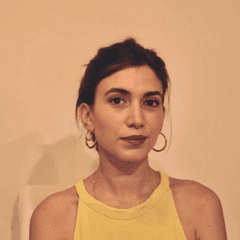
Sophia Emmanuello
Born in the Eternal City, Sophia is a Montessori teacher with a degree in Oriental Languages and Cultures.
During her study and research travels in Asia, she developed an educational outlook enriched by diverse cultural perspectives.
Over the past several years, she has taught Italian both as a first and second language, to children and adults in Italy and abroad.
These experiences have shaped a flexible and respectful teaching approach, informed by Montessori principles and grounded in a deep curiosity for global educational philosophies.
She applies the Montessori method to teaching Italian, fostering autonomy, curiosity, and active engagement in every learner.
You may also be interested in

Italian Intermediate (B1)

Italian Intermediate (A2)